This is default featured slide 1 title

Go to Blogger edit html and find these sentences.Now replace these sentences with your own descriptions.This theme is Bloggerized by Lasantha Bandara - Premiumbloggertemplates.com.

This is default featured slide 2 title

Go to Blogger edit html and find these sentences.Now replace these sentences with your own descriptions.This theme is Bloggerized by Lasantha Bandara - Premiumbloggertemplates.com.

This is default featured slide 3 title

Go to Blogger edit html and find these sentences.Now replace these sentences with your own descriptions.This theme is Bloggerized by Lasantha Bandara - Premiumbloggertemplates.com.

This is default featured slide 4 title

Go to Blogger edit html and find these sentences.Now replace these sentences with your own descriptions.This theme is Bloggerized by Lasantha Bandara - Premiumbloggertemplates.com.

This is default featured slide 5 title

Go to Blogger edit html and find these sentences.Now replace these sentences with your own descriptions.This theme is Bloggerized by Lasantha Bandara - Premiumbloggertemplates.com.

Wednesday, January 12, 2011

Zenvo ST1 Top Gear Cars Review

Zenvo Top Gear
Zenvo Top Gear
Zenvo Top Gear
Zenvo Top Gear
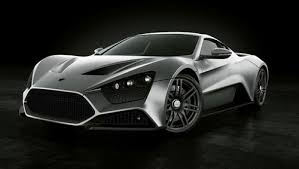
We’ve posted information about the Zenvo ST1 – the first Danish supercar before. This time around we present you a video from Bil Magasinet on a test drive of a prototype. As a refresher, “Using a rear-mounted turbo- and super-charged 7.0-liter V8, Zenvo’s engineers brought this car up over 1100 hp while producing an amazing 1430 Nm at around 4500 rpm. In just three seconds, you can bring the car from a standstill to 100 km/h. Figure out a way around the electronic limiter, set for 375 km/h (233 mph), and we’re pretty sure you can avoid arrest on almost any highway in the world.” (WCF) As you watch the video, the host gives more information on the handling and speed of the car. At high speeds, one of the more impressive things he says about the Zenvo is that its, “almost like driving a small hatchback .”
                                                 

zenvo Top Speed Cars

zenvo st1 new deta-2
2009 zenvo st1 supercar
zenvo-st1-supercar
zenvo-st1-dynamic-car
Zenvo ST1 Car
Zenvo ST1 Car

Tuesday, January 11, 2011

vauxhall astra Wallpapers& Review

vauxhall astra
vauxhall astra
vauxhall astra

2010 Vauxhall Astra - Interior Revealed


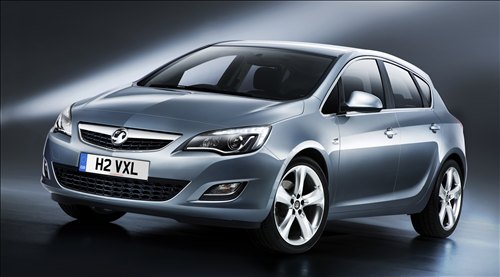
While the exterior is still clearly an Astra, the new interior of the 2010 Vauxhall Astra borrows heavily from the Vauxhall Insignia and is a marked improvement over the outgoing Astra. The central theme of the new interior is Opel's "wing and blade" motif that combines geometric shapes and smooth curves for a very modern look. Setting off the new styling is careful use of GM's new favorite trick, accent lighting. While we find the new interior quite stylish, we're a bit turned off by the button-heavy center stack. The steering wheel many will recognize from the upcoming Chevrolet Cruze, which the Astra shares its platform with.
The new interior is more than just a pretty face, though. Opel spent a great deal of effort on rethinking its interior storage
While the exterior is still clearly an Astra, the new interior of the 2010 Vauxhall Astra borrows heavily from the Vauxhall Insignia and is a marked improvement over the outgoing Astra. The central theme of the new interior is Opel's "wing and blade" motif that combines geometric shapes and smooth curves for a very modern look. Setting off the new styling is careful use of GM's new favorite trick, accent lighting. While we find the new interior quite stylish, we're a bit turned off by the button-heavy center stack. The steering wheel many will recognize from the upcoming Chevrolet Cruze, which the Astra shares its platform with.2010 Vauxhall Astra Interior Revealed Car Wallpapers
spaces for maximum practicality. Highlights include a hard case for sunglasses above the driver's door, a center console storage cubby that can hold nine CD cases, an optional drawer under the passenger's seat, a two-compartment glove box that can be turned into one large compartment and has a separate, smaller, secondary glove box below it, more cup holders front and rear and special storage for coins and pens in the glove box. The Astra also gets a special pocket in the rear storage area for a first aid kit as well as more under-floor storage space.

vauxhall astra


Vauxhall Astra Cars

Vauxhall Astra

In our recent issue on hot hatches, the new Vauxhall Astra is steadfastly refusing to play ball. Though you

vauxhall astravauxhall astra


can still buy the previous-gen VXR, there won’t be a MkVI Astra VXR until next year, following the unveiling of the three-door Astra this autumn. Boo.
So if you want a hot new Astra and you want it now, you mightthink this car – the fastest, most powerful diesel variant on the sports chassis – would be a good bet. After all, behind the 1.6-litre turbo petrol version, it’s the quickest accelerating Astra currently on sale, and the most torquey. You would be wrong.
The 2.0-litre diesel has been nabbed straight from the Insignia, and its vital statistics are good. It manages 158bhp and a meaty 258lb ft (more than a Golf GTI or Megane RenaultSport, if you’ll forgive our selective statistic-grabbing) and will return 59mpg while hauling the Astra to 62mph in just under nine seconds. Not mad-fast, but quick enough.
 
Quick enough, but in no way… hot. In fairness, Vauxhall isn’t pitching this Astra as a diesel-hot-hatch, leaving that territory to the Leon FR and Golf GT TDI. Good thing too: the engine is more lazy low-end torque than zippy free-revving, the sort of unit where pushing it past 3,000rpm seems a bit unfair, like forcing a beefy weight-lifter into a dainty skipping routine.
This car is, however, a mighty effective way of dispatching motorway miles. The new Astra has already impressed us with its big-car feel, and this diesel feels the biggest of the bunch: long-legged, rapid and  amply powered in an understated way.
It isn’t the last word in hushed refinement, but it’s somewhere in the second half of the book at least. We’d have to test them back-to-back to be sure, but it seems less chuntery than the Focus’s diesel, as smooth as the Golf’s biggest diesel. Not the same league as the sickeningly brilliant small-displacement diesels churning out of BMW at the moment, true, but frankly not much is. As torquey, non-sporty diesels in modest family hatches go, this is one of the best.

Our test car had Vauxhall’s ‘sports chassis’ instead of the optional ‘FlexRide’ system with adjustable dampers. So should yours. Leave FlexRide alone: the non-adjustable chassis – though hardly sporty – is fine in its own right, and saves you £450. Which, coincidentally, is almost exactly slightly less than the price difference between the 1.7-litre, 123bhp diesel Astra and this one. TopGear Tipsmith, he say: save on FlexRide; go for big diesel.

Opel Corsa Cars Review


Following the recent announcement of the new three-door Corsa comes its five-door sibling. While the three-door concentrates on sportiness, the five-door is more practical and features FlexFix, a new seat folding system following the method introduced on the Opel Trixx concept from 2004. The "DualFloor" arrangement lets luggage be horizontally divided in the trunk, whose volume can extend to 1100 litres. A new interior color scheme means customers can also choose between red and blue trim, while piano lacquer is available as an option.

Outside, surface changes are most noticeable at the rear, haunches doing without the extended shoulder treatment of the three-door. The window-line is also less arched, the two models differentiated in the same manner as the larger Astra. Length increases by 183mm to 3999mm overall, while width and height grow by 61mm and 52mm respectively. Both models will make their debut at the British Motor Show in London next month.

Opel Corsa 5-door

Opel Corsa

Opel's Corsa is a very popular compact tuning platform over in Europe. Open any European tuning rag and you'll see its pages littered with tuned and tweaked versions of GM Germany's feisty two door. The aftermarket business is just as popular in Europe as it is in the U.S. and Japan, and Euro tuners (the people) spend billions of Euros (the money) a year on tricking out their rides.

Opel sees this healthy aftermarket as billions of Euro in lost profits. Why should a Corsa owner send his/her cash and car over to Steinmetz when GM can build a hot Corsa right from the factory? To fill the public's growing need for a fast hatch, Opel has built its fastest Corsa ever - the Corsa OPC. Opel fans (all two of you in the U.S.) may already be familiar with the "OPC" name, as GM Germany has slapped the badge on other tuned Opels such as the Astra and Vectra. With the introduction of the Corsa OPC, the total number of factory-tuned Opels gets bumped up to six.

So what makes the Corsa OPC so special? Well, it's a hatch of the "hot" variety, meaning its engine and suspension have been built up considerably. This Corsa gets its motivation from a turbocharged 1.6 liter inline four that pushes out 192 bhp and 230 Nm (169 lb.-ft.) of torque. Those numbers aren't bad - especially considering the engine's diminutive size. Still Opel knows that Corsa OPC drivers will sometimes find themselves wanting an extra bit of power, so an overboost system was added to allow the engine to temporarily increase its torque by 15 percent. 
 
All this power, plus the close-ratio six-speed manual transmission can get the Corsa OPC from null to 100 km/h (62 mph) in just 7.2 seconds. Top speed in the Corsa is a respectable 225 km/h (139.8 mph) - not bad for a car with "just" a 1.6.

With the Corsa OPC being a real "Euro-tuned" ride, a lot of attention was given to the car's suspension set up. Opel - being based in Germany and all - tuned the hot Corsa on the famed Nurburgring Nordschleife. Upgrades to the suspension made include a stronger rear axle profile, revised springs and dampers that drop the ride height by 15 mm and a revised stability control program (which can be turned completely off if so desired). 17-inch wheels come standard, but 18-inchers are optional. The car's internally-ventilated brake discs measure a hefty 308 mm in the front and 264 mm in the rear.

Part of the appeal of a hot hatch is its appearance. Special attention was given to the Corsa OPC's exterior so that it would appeal to the German boy-racer types that will likely be all over this thing. The OPC's front end gets a more aggressive treatment, as does the rear - check out that triangle-shaped exhaust in the center. The car's side mirrors and rear wing are also OPC-exclusive.  
Special attention has been paid to the OPC's cockpit as well. Depending on the vehicle color chosen, some of the OPC's interior trim pieces (such as the rings around the vents) will be given a silver or blue color. The Opel OPC's front racing buckets were developed in conjunction with super seat maker Recaro. These seats are said to offer all the support that a traditional racing bucket has with the added safety and security of integrated side airbags.

The Opel Corsa OPC is now available for order in Europe for a rather affordable (for Europe) 22,560 Euros ($30,204). With exchange rates being what they are (and given Americans' dislike for small vehicles), there's a near 100-percent chance that we'll never see the Corsa OPC here in the States. Still, one never knows... If Saturn's new Opel - the Astra - is a huge sales success for GM's U.S. side, we just may see the Corsa offered here. Again, the chances of that happening are slim to none


Wednesday, January 5, 2011

Anteros XTM Cars

Add caption

Anteros Reveals Exotic 550-Horsepower Supercar

Source: Anteros Marketing | Published: October 30, 2006
After an exciting sneak preview at the Monterey Classic Car Show, Anteros Marketing announces the Golden Age of Coach-building is here to stay. Anteros XTM is a limited production 2-seat convertible sports car featuring 400 to 600 horsepower, a carbon fiber composite body with a fine leather and wood interior, and state-of-the-art technology throughout.

Anteros takes its name from the ancient god of Passion. It is a passionate expression of Automotive Fine Art. Anteros Founders, John Rothman, and son, David Rothman, commissioned a team of talented designers and fabricators to create a brutally elegant car that seamlessly blends both contemporary and classic sports car DNA into a stunning artistic sculptural statement. Anteros uses the base engineering of the C6 platform as a foundation to create this 550 horsepower rolling sculpture in carbon fiber and luxury leather.

“We had a fantastic reaction to the Anteros at the Monterey Classic Car Show, exotic car dealers around the United States are anxiously waiting production slots“, said Mr. David Rothman, President of Anteros Marketing. With pricing between $125,000 and $135,000, the Anteros XTM will be manufactured on a semi-custom build-to-order basis.

Anteros Marketing, a California based coachbuilder, also has under development the Anteros XTS Targa featuring a removable hardtop. Their future plans are to release the Anteros XTR Hardtop based on the Z06 platform that will feature horsepower of 505 to 655 bhp.

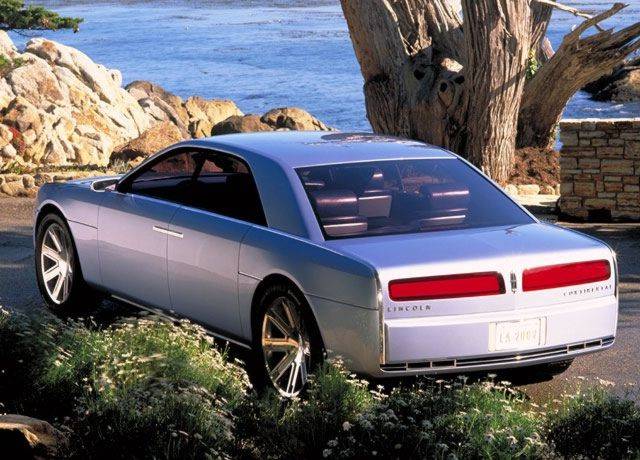
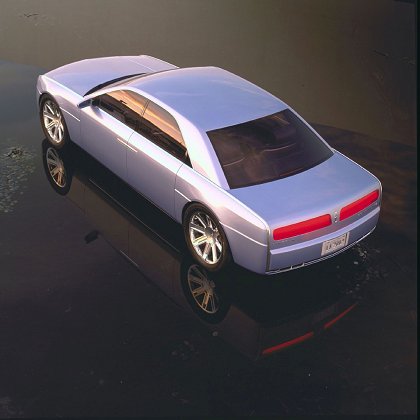
2010Lincoln Continental Cars


Saturday, January 1, 2011

Classic Muscle Cars Review & Pictures

Classic Muscle Car

Muscle Cars & Classic Cars Reborn

These are exciting days and times for car enthusiasts. Muscle cars and classic cars have been brought out of the non-existent museum of retired classic cars & muscle cars and they have been reborn and given new life. 

Classic Muscle Car

Vrooom!!                                               

The muscle car is something that is as All-American as All-American gets. These cars hearken back to another era; an era in which Detroit dominated the world auto industry with innovation, style, gusto and raw power. U.S. cars were the envy of the world. Now those mu
muscle cars classic cars reborn
scle cars and classic cars have been given new life. Let’s talk about these cars.
Chevy Camaro. In the house. Can I get a witness? Can I get a woot-woot??!!
As much a star of the blockbuster “Transformer” movie as Megan Fox, this car is smokin hot. Red hot. Even white hot. If looks could kill – our city streets would be a crime scene, because this car has deadly hot looks.
The new model is available in a 2010 Transformers Special Edition which features the word “Transformers” emblazoned.,
on the hood, as well as strategic silver “Transformer” logos in certain key area (sort of a head logo of one of the Transformers).
More info about the all-new 2010 Chevy Camaro and Chevy Camaro Transformers Special Edition can be found at the link below.
Ford Motor Company has also been busy as of late.
How the Capri made it into “classic car” status is unknown, we surely though could call the Capri retired. It has now been reborn and with fabulous new styling. And what a car it is. 
The Capri was originally built in Europe and sold in the U.S. This car was sold simply under the name “Capri” and later “Mercury Capri”. The new Ford Capri will have the latest in Ford’s European styling. And this car is now a sports car(!)
                                   SEE Classic Muscle Cars Pictures
Classic Muscle Car
Classic Muscle Car
Classic Muscle Car
Classic Muscle Car
Classic Muscle Car
                                         Classic Muscle Car Road Test 

Gemballa Mirage GT Black Cars

Gemballa Mirage GT Black
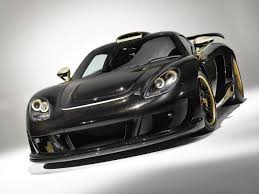
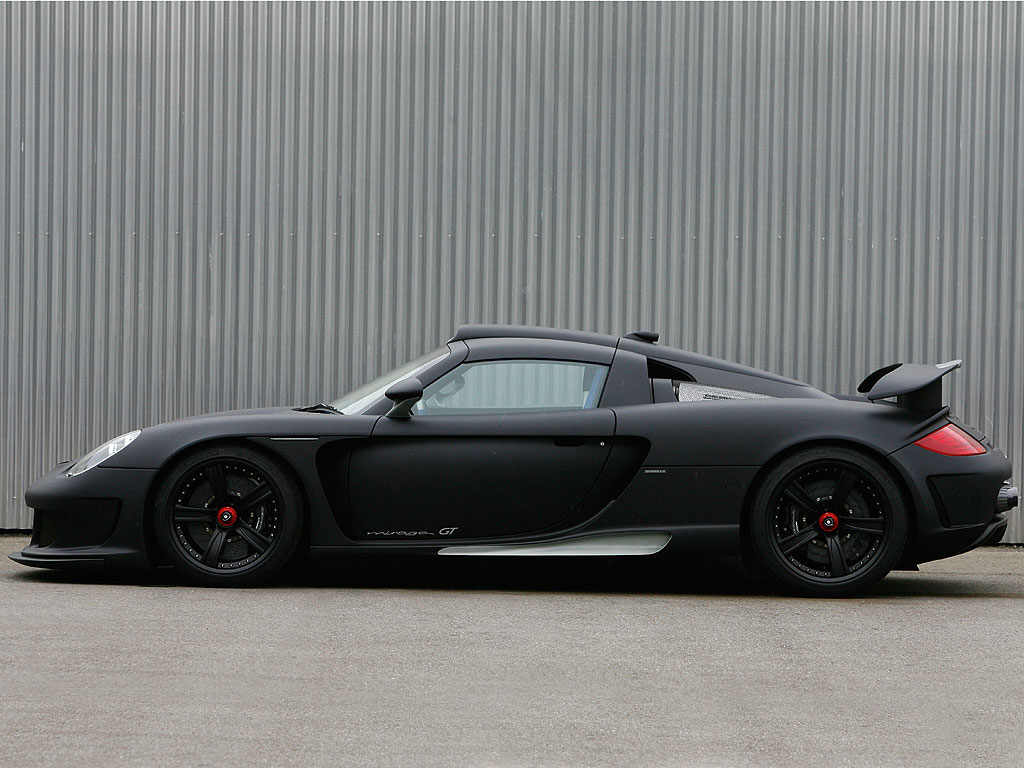
This is the latest Mirage GT to come out of Porsche tuner, Gemballa’s garage. The Carrera GT may well have ceased production on May 6, 2006 but Gemballa are still finding enough interest in their Mirage kits to create a new one every now and again.

This Mirage GT is similar to the carbon edition we showed you last month. It’s got 650bhp and is capable of 0-100kph (62mph) in 3.7 seconds, 0.2 seconds faster than the standard car. 0-200 kph is also dealt with in 0.2 seconds less, 9.7 seconds in total. It tops out at 335 kph (208mph).
The exterior looks stunning as always with Mirage GT’s. The mix of matte black paintwork and silver accents really make the car stand out. The interior is less of a success though.
As with most tuners, Gemballa have added a garish ‘one-off’ theme to the car. A mixture of black material, blue alcantara and a space age-looking silver material give it a strange new look that’s definitely an acquired taste! As you’d also expect, there’s plenty of carbon fibre in this car.
Gemballa Mirage GT Black
                                                                          

2010 Range Rover Wallpaperts, Review & Specifications

2010 Range Rover
Last year, Land Rover unveiled the LR3 (Discovery 3, in Euro-speak), a midsize luxury 4x4 SUV that marked the company's first all-new offering as a member of the Ford stable. Based on a two-piece hydroformed chassis code-named T5, the LR3 boasted such new developments as four-wheel independent air suspension and a dial-actuated "Terrain Response" four-wheel-drive system, that allows the driver to literally tune the vehicle's performance parameters to best suit the terrain at hand.
This year, Land Rover returns with two more entries. One vehicle, already safely ensconced in the pantheon of 4x4 legend, sports enhanced levels of performance and refinement; while the other, brand new for '06 and based on the T5 chassis, takes the Land Rover brand in a radically new direction-the rarified high-performance sport/touring segment previously thought the province of SUVs from Mercedes, BMW, and Porsche.
All new for 2006, the Range Rover Sport could just as easily be called the Rover GT, as it's built with the "Grand Touring" concept in mind: smaller, lower, cozier inside, and sportier on pavement than the Range Rover. Five inches shorter in wheelbase (via a chopped frame), 7 inches shorter in length, and 2 inches lower in ground clearance, with 40-series radials on 20-inch rims (get over it already!), the Rover Sport aims to expand Land Rover's presence in the luxury SUV segment. And while the Sport may have the looks of an AWD sport-tourer, it has all the four-wheeling hardware found on the Range Rover-and quite a bit more.
A peak at the body specs alone provides a hint of the degree of technology that went into the Rover Sport's development: Aluminum bonnet and tailgate, zinc-coated steel doors, new die-cast magnesium crossbeams and magnesium alloy front body panels for reduced weight and better crash protection, and brand-new body dampers which supplement the factory body mounts and bushings to reduce on-road vibrations at lower speeds.
Or consider the all-new Dynamic Control system, a mind-boggling ride and handling assist that employs sensors in the A-pillar and steering-to gauge levels of body roll and steering input under throttle-to engage pump-driven front and rear antisway bars (via an internal motor in each sway bar) to compensate for excess body lean. Additionally, the system shuts off automatically in low-range-unless, of course, it senses the vehicle tottering precariously on a sidehill. Simply put, the Rover Sport is the most technologically advanced vehicle Land Rover has built to date.
The Rover Sport utilizes the same power- and drivetrain as the Range Rover, with both naturally aspirated and supercharged versions of the 4.4/4.2 V-8, slightly de-tuned for the RS application, with the ZF six-speed transmission and two-speed transfer case with 2.93:1 low-range. Height-adjustable, wishbone-located air springs-with graphite knuckles and re-engineered bushings-are at all four corners, with locking center and rear differentials monitoring wheelspin and torque transfer. The Rover Sport comes with premium tires: HSE versions get 255/50R19 Dunlop Grandtreks on 19x9-inch rims; Sport SCs get 20s and 275/40R20 Michelin M + S Synchrones. The tires are V-rated-a good thing, as the Rover Sport's top speed is a governed 140 mph.
Because it squats lower to the ground and has a poorer ramp breakover angle than the Range Rover, it is a good thing that the Sport version is additionally equipped with the Terrain Response System, which debuted last year on the LR3. The system, which is activated by a dial on the center console, essentially reprograms the vehicle's ECU on the fly to re-adjust a slew of vehicular functions to best suit the demands of diverse terrains: mud, ice, snow, rock, sand, and pavement. With a flip of a dial, throttle tip-in, transmission shift points, suspension movement, torque bias and hundreds of other functions are electronically recalibrated to provide optimal performance on whatever surface the vehicle happens to be driving on.
On highway, the supercharged Rover Sport provides an outstanding ride-quick and nimble, crisp and precise, unmistakably carlike. Our test unit showed excellent lateral stability when pitched into high-speed turns, and brake feel in particular was exceptional-no grabs or twitches, with progressive, predictable response to pedal input. Caught in a nasty snowstorm on a high mountain two-lane, we piloted the Sport in 1st gear for about half an hour-downhill all the way, 12 miles' worth-with no rear-wheel slippage, loss of handling, or need to ride on the brakes-we didn't use the brakes at all, in fact. The Sport's racing-style bucket seats are smaller and narrower than the seats in the Range Rover; they envelop the driver's body with form-fitting leather side bolsters, providing outstanding support and bestowing a sportier feeling to the Sport's interior.
Off-pavement ... well, we were a bit worried about those 40-series tires and quasi-dub rims, but our fears turned out to be unfounded. Our testing this time took us through rain-soaked gulleys, muddy trails, and even a Mini-Rubicon-style rockcrawling course. As with the Range Rover, the Rover Sport relies on its locking diffs and electronic traction controls to keep the vehicle moving, and they worked flawlessly in mud and on rocks. The "Rocks" setting on the Terrain Response dial radically remaps the Sport's throttle and gearing algorithms-you can rev the V-8 up to nearly two grand in 1st gear, and still keep vehicle speed at near-idle levels in low-range. (A couple of vehicles in our test group suffered sidewall punctures-tough to do, we reckoned, as there's not much sidewall to mess with-but this happened not on the rocks but in a rainy sluice littered with sharp stones and tree branches. Other, more "trailable" tires would likely have suffered the same fate at the street pressures we were running.)
Comparing these vehicles is a little like apples and apples-similar in DNA and design, but divergent enough in taste to appeal to many palates.
For traditionalists, the new Range Rover offers all the creature comforts and off-pavement prowess the vehicle is known for, as well as a level of street performance previously unfamiliar to the marque. It also comes with a premium price tag: nearly $75,000 for the base-model HSE. It's rather a bit rich for our blood, but we suspect that for the typical Range Rover buyer, this would be of secondary concern.
The Rover Sport, however, ups the ante in the upscale sport-touring segment considerably, with Teutonic-level ride and handling characteristics on pavement, all the green-lane aptitude of the LR3, and a price that makes it an instant competitor: As one media wag put it, "For $60K and change, who would buy an X5 anymore?" Not the most tactful comparo, perhaps, but one we'd imagine would leave some Land Rover aficionados-and perhaps a few LR execs, in private-licking their chops with malicious glee. We'll have both vehicles in hand for our 2006 Four Wheeler of the Year test, coming in our February 2006 issue. They both figure to be serious playas-stay tuned for all the results.
Technical Specifications:
Vehicle: 2006 Range Rover Sport HSE/SC
Base price: $56,750/$69,750
Engine: Aluminum 90-degree AJ V-8Displacement (liters) 4.4/4.2
Bore x stroke (in.): 3.47 x 3.56/3.39 x 3.56
Aspiration: Twin-impeller Eaton supercharger
Valvetrain: DOHC 4 valves/cyl.
Max hp @ rpm: 300 @ 5,500/390 @ 5,750
Max torque (lb-ft) @ rpm: 315 @ 4,000/410 @ 3,500
Transmission: Six-speed automatic
Ratios (:1)
1st: 4.17
2nd: 2.34
3rd: 1.52
4th: 1.14
5th: 0.87
6th: 0.69
Rev: 3.40
Transfer case: Full-time two-speed
Low range ratio (:1): 2.93
Axle ratio (:1): 3.73/3.54
Crawl ratio (:1): 45.57/43.25
Suspension: Four-wheel independent; double wishbones, adjustable air springs
Differentials: Locking center; locking rear
Steering: ZF Servotronic rack and pinion
Brakes, f/r: HSE: 13.5-in./13.9-in. Bosch four-channel,
SC: 14.2-in. Brembo/13.9-in. Bosch four-channel
Wheels/Tyres: HSE: 19x9 alloy/255/50R19, SC: 20x9.5 alloy/275/40R20
Wheelbase (in.): 108.0
Length (in.): 188.5
Width (in.): 75.9
Max height (in.): 69.6
Base curb weight (lb.): 5,468-5,670
Max ground clearance (in.): 8.9
Max approach/departure angles (deg.): 34/27
Max breakover angle (deg.): 25
Max towing capacity (lb.): 7,716
Interior cargo capacity (cu. ft.): 71.0
Fuel capacity (gal.): 23.3
EPA mileage estimates, combined (mpg): 18.5/17.5
Seating capacity, persons: 5
2010 Range Rover
2010 Range Rover
2010 Range Rover

Related Posts Plugin for WordPress, Blogger...