This is default featured slide 1 title

Go to Blogger edit html and find these sentences.Now replace these sentences with your own descriptions.This theme is Bloggerized by Lasantha Bandara - Premiumbloggertemplates.com.

This is default featured slide 2 title

Go to Blogger edit html and find these sentences.Now replace these sentences with your own descriptions.This theme is Bloggerized by Lasantha Bandara - Premiumbloggertemplates.com.

This is default featured slide 3 title

Go to Blogger edit html and find these sentences.Now replace these sentences with your own descriptions.This theme is Bloggerized by Lasantha Bandara - Premiumbloggertemplates.com.

This is default featured slide 4 title

Go to Blogger edit html and find these sentences.Now replace these sentences with your own descriptions.This theme is Bloggerized by Lasantha Bandara - Premiumbloggertemplates.com.

This is default featured slide 5 title

Go to Blogger edit html and find these sentences.Now replace these sentences with your own descriptions.This theme is Bloggerized by Lasantha Bandara - Premiumbloggertemplates.com.

Tuesday, March 8, 2011

2011 MARCH BARCELONA TEST SESION, DAY 1 IN HIGH RESOLUTION IMAGES


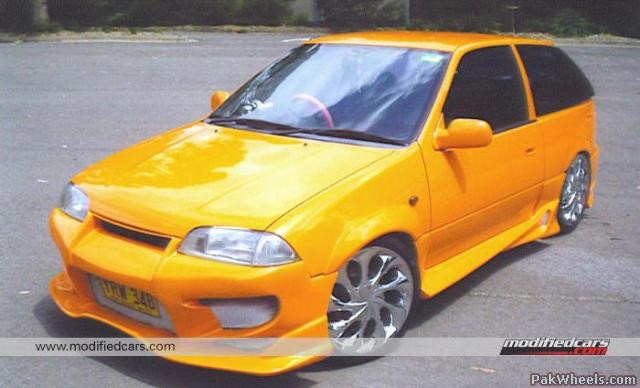
Suzuki Swift Modified Cars

Suzuki Swift Modified

Suzuki Swift Cars

Suzuki Swift
Suzuki Swift
Suzuki Swift
Suzuki Swift
Suzuki Swift

Monday, March 7, 2011

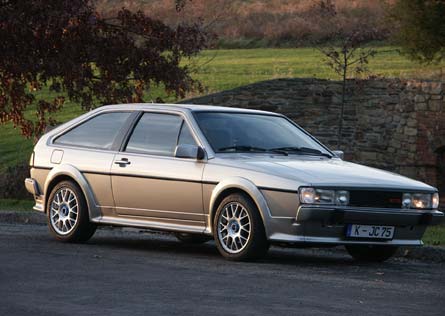
Volkswagen Scirocco

Volkswagen Scirocco
Volkswagen Scirocco
Volkswagen Scirocco
Volkswagen Scirocco
Volkswagen Scirocco

Volkswagen 2011 New Beetle

Volkswagen 2011 New Beetle

Friday, March 4, 2011

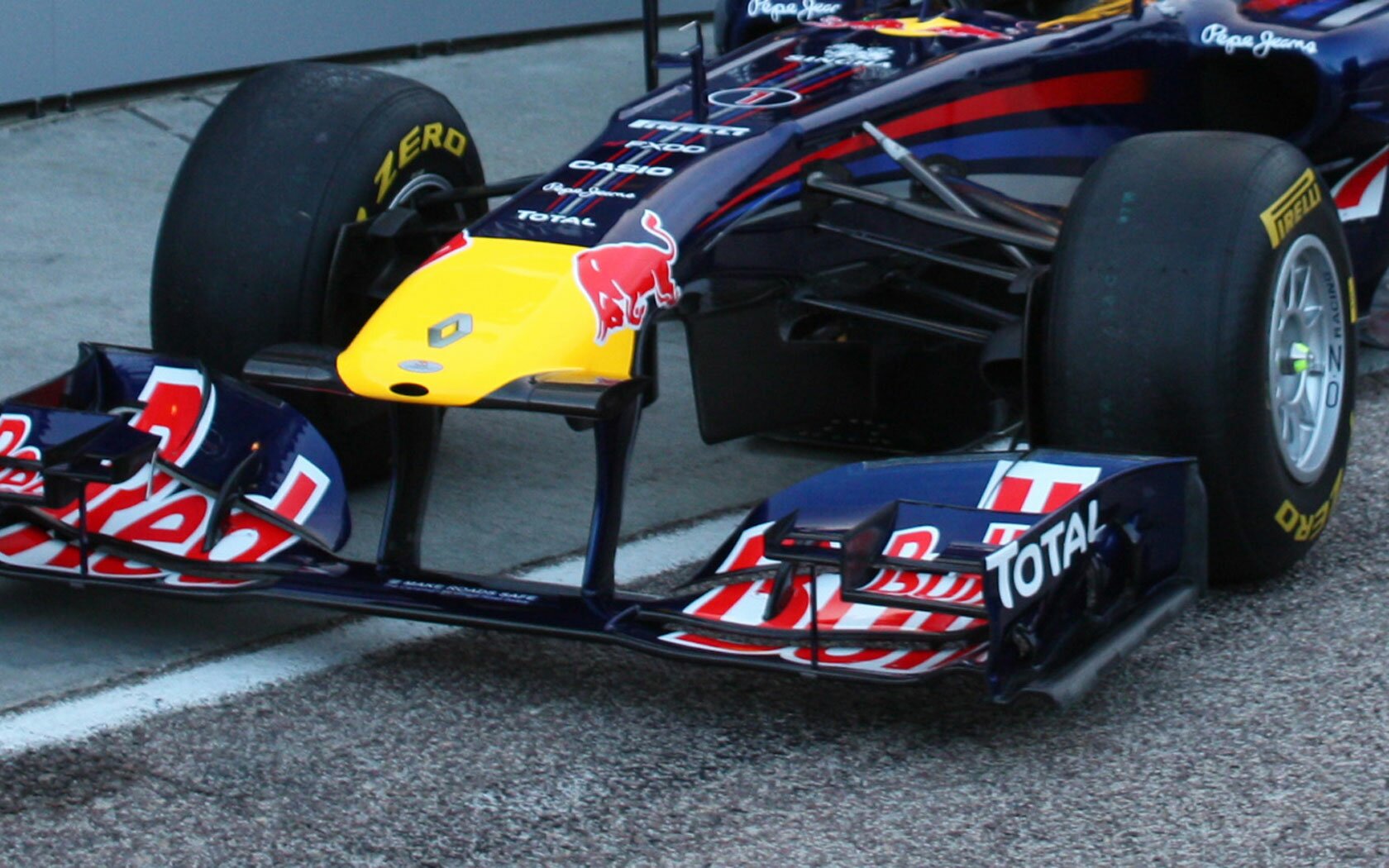
Red Bull RB7 Wallpapers

Red Bull RB7 Wallpaper

Red Bull RB7

The Red Bull RB7 is a Formula One racing car designed by Red Bull Racing for the 2011 season. It will be driven by defending champion Sebastian Vettel and Australian driver Mark Webber. The car was launched at the Circuit Ricardo Tormo in Valencia, Spain on 1 February 2011. Sebastian Vettel was the first driver to test the car.
The car was fastest throughout Barcelona testing with Vettel at the wheel.


Red Bull RB7
F1 2010 Jerez day 3-3 (cropped).jpg
Category Formula One
Constructor Red Bull Racing
Designer(s) Adrian Newey (Chief Technical Officer)
Rob Marshall (Chief Designer)
Peter Prodromou (Head of Aerodynamics)
Technical specifications
Chassis carbon-fibre and honeycomb composite monocoque, designed and built in-house, carrying engine as fully stressed member
Suspension (front) Aluminium alloy uprights, carbon-composite double wishbones with springs and anti-roll bar, push rod-actuated multimatic dampers
Suspension (rear) as front, except pull rod-actuated rear dampers
Engine Renault RS27-2011 2,400 cc (146.5 cu in) 90° V8, limited to 18,000 RPM with KERS naturally aspirated mid-mounted
Transmission Seven-speed semi-automatic gearbox with reverse gear Hydraulic system for power shift and clutch operation
Weight 640 kg (1,411 lb) (including driver)
Fuel Total
Tyres Pirelli P Zero
OZ Wheels (front and rear): 13"
Competition history
Notable entrants Red Bull Racing
Notable drivers 1. Germany Sebastian Vettel
2. Australia Mark Webber
Debut 2011 Australian Grand Prix

Red Bull Racing RB7 Renault Review,Specs,And Features

 Review
Red Bull Racing launched its 2011 challenger - the RB7 - at the Ricardo Tormo Circuit near Valencia, Spain. The car, which the team hopes will successfully defend its two Formula One titles, was unveiled in the pit lane at 0830hrs by 2010 World Champion Sebastian Vettel and his team- mate Mark Webber. This was followed by a press conference in the Team's Energy Station with the two drivers, team principal Christian Horner and chief technical officer Adrian Newey. The RB7 completed its first lap of the circuit when testing began at 1000hrs.

It's just 11 weeks since Sebastian Vettel drove to victory in Abu Dhabi and less than six weeks before the car will contest the Bahrain Grand Prix. This morning was the culmination of months of hard work in Milton Keynes, where every department has been focused on increasing the silverware in the Red Bull Racing trophy cabinets.
Christian Horner commented: " It's a great feeling to arrive here and roll out the car with the number one on it as the reigning World Champions, but now the challenge is to keep it. The team's been very focused on RB7 over the last few months; Adrian didn't release his drawings any earlier than normal, so the whole design group and production team have done a remarkable job to produce this car in the shortest possible time. It's a long season, the longest in F1 history, and we have some great opponents, but we are very motivated and will be working hard to hold on to the two world titles. I'm sure it's going to be a fascinating battle."

Adrian Newey said: "It's always a special moment when a car runs for the first time. The big challenge for us this year was the reintroduction of the KERS system. It's always a challenge to find solutions, which don't compromise the aerodynamics of the car. This season, with McLaren, Ferrari and Mercedes all having KERS, we need to get it to work, simply for performance off the line."

On the day it launched its all-new RB7, Red Bull Racing is pleased to welcome several new partners for 2011, as well as reconfirming continuing and enhanced agreements with many of its existing partners. Red Bull Racing's Partner portfolio now includes: Total, Rauch, Pepe Jeans, Casio, Singha Beer, FXDD, Geox, Pirelli, Alpinestars, Platform Computing and Siemens.


Red Bull Racing RB6 Renault Specifications & Features


General specifications
Country of origin Austria
Numbers built N/A
Produced in 2011
Predecessor
    Red Bull Racing RB6 Renault

Engine
Configuration Renault RS27-2011 90º V 8
Location Mid, longitudinally mounted
Construction light alloy block and head
Displacement 2.4 liter / 146.5 cu in
Valvetrain 4 valves / cylinder, DOHC
Fuel feed Fuel Injection
Aspiration Naturally Aspirated

Drivetrain
Chassis/body carbon-fibre composite and honeycomb monocoque
Front suspension double wishbones, push-rod actuated torsion bar springs
Rear suspension double wishbones, pull-rod actuated torsion bar springs
Brakes ventilated carbon ceramic discs, all-round
Gearbox 7 speed Semi-Automatic
Drive Rear wheel drive

Dimensions
Weight 640 kilo / 1411 lbs

Bugatti Type 41 Royale Kellner Coach ,History,Review,Specidications


Model history:Ever since he started building cars under his own name, Ettore Bugatti dreamed of creating the ultimate, no compromise luxury car. To that end, he started the development of an eight cylinder engine in 1913 and wrote in great detail about his ambitions in a letter to his friend Espanet. The project was cut short by the outbreak of war throughout Europe. Bugatti redesigned the engine and was used in the war to power airplanes. With peace returned to Europe, Bugatti continued to produce the four cylinder engined cars that had proven so popular before the war.
A first sign of things to come was an experimental eight cylinder engined chassis shown at various motor shows in 1921. The displacement of the production version was just two litres, which was far short of what would be required to build Bugatti's dream machine. In both road (Type 30) and competition (Type 35), the new eight cylinder engine was very successful, freeing up resources for what was referred to as the 'Golden Bug'. In 1926 Ettore Bugatti revealed his plans for a fifteen litre engined luxury car. It would eclipse the best the likes of Rolls-Royce had to offer and was targeted at the very richest of customers and in particular royals, giving the Golden Bug its more familiar 'Royale' nickname.
Although displacing well over seven times more than the Type 30/35 eight cylinder engines, the engine in the Type 41 followed the same design, just at a completely different scale. The in-line engine had a block cast in one piece with an integral cylinder, measuring a staggering 1.4 metres in length. Actuated by a single overhead, each cylinder featured three vertically mounted valves; two intake and exhaust. The dry-sump engine was fed by just one Bugatti designed Carburetor and sported two plugs per cylinder. The prototype engine had the promised displacement of around 15 litres, but for the subsequent production cars a slightly smaller displacement of 12.8 litre was chosen.

Add capti
To allow room for the absolutely massive engine, Bugatti constructed a chassis with a wheelbase of 4.3 metres. Like most Bugatti's chassis, the Type 41's was a highly conventional ladder frame, suspended by live axles front a rear. At the front semi-elliptic leaf springs were fitted while the rear suspension featured the traditional Bugatti reversed quarter elliptic leaf springs. Operated by cables, the drum brakes followed the cars massive dimensions with a diameter of 18 inches. As with the successful racing cars, the one-piece aluminium wheels doubled as brake drums. While the Type 41 chassis was not the most advanced available, the meticulous finish was absolutely fantastic.
Equipped with a place-holder Packard body, the first chassis was completed in 1927. Despite its exceptional dimensions, the Royale impressed by its road holding capabilities and fabulously quiet ride. Ettore Bugatti had certainly succeeded in building the ultimate luxury car, but now came the difficult part; finding customers. The biggest obstruction was the high price Bugatti asked for the car. At the 1932 Olympia Show in London one of the chassis was offered for a staggering £6,500, which was twice as much as a the most expensive Rolls Royce.


Add capt
Eventually only five additional Royales were constructed, which was well short of the 25 car run Bugatti had quietly hoped for. Only four of these found an owner; the first and last car produced remained in the hands of the Bugatti family for many years. Ironically none of the Royale's owners were royals and to this date none of the six Type 41s has ever been owned by a royal. Bugatti did manage to turn a profit out of the project by selling Type 41 engines to a train manufacturer. With the subsequent Type 46, 50 and 57 models, Bugatti did manage to conquer the luxury market.


Chassis:
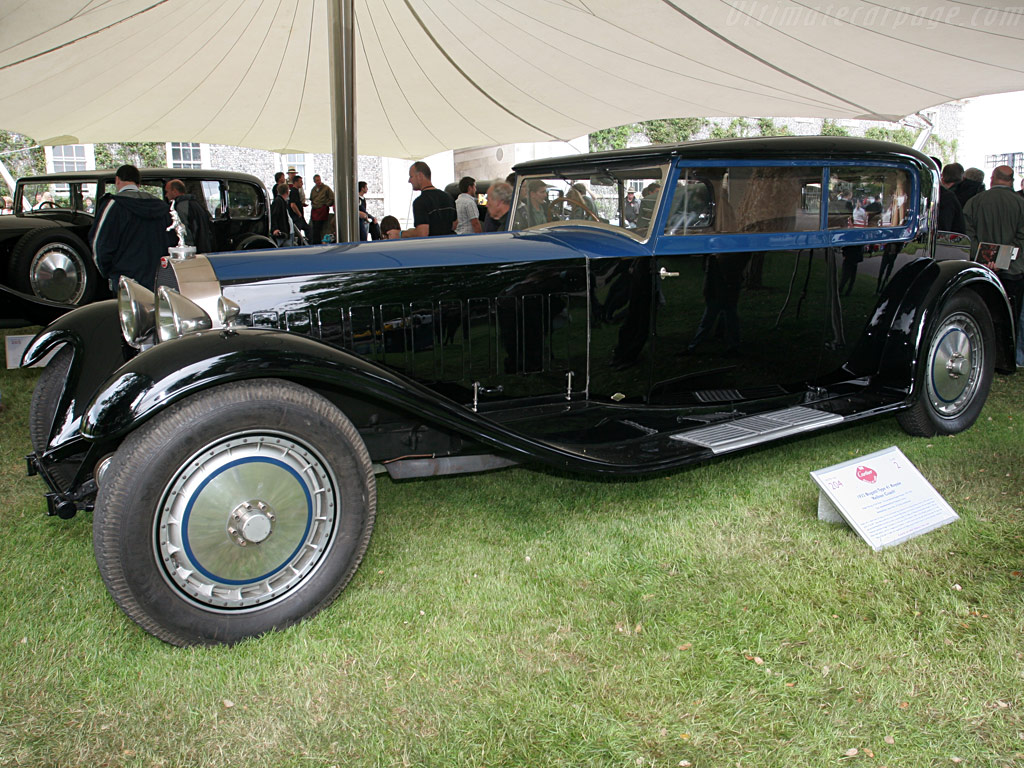
Originally owned by the Bugatti family, the featured Type 41 Royale was the fifth example built. It was bodied by Kellner with a two-door sedan body, which easily seats four people. This was the car that was on display at the 1932 Olympia Show. After the second world war it was one of two Bugattis bought by Briggs Cunningham. It was retained by the family until 1987 when the car was offered at a Christie's auction. It sold for a staggering $8.7 million, which to this date is the highest price paid for any car at an auction. It was a smart investment as three years later it sold for almost twice as much to the Meitec Corporation in Japan. In recent years the car resurfaced and is frequently shown at events by Swiss broker Lukas Huni. It is shown above during the 2007 Goodwood Festival of Speed where it celebrated the Royale's eightieth anniversary along with four other examples.

 Bugatti Type 41 Royale Kellner Coach Specifications
General specifications
Country of origin France
Chassis number 41141
Numbers built One of six Royales
Produced in 1932
Body design Kellner

Engine
Configuration Straight 8
Location Front, longitudinally mounted
Weight 350 kilo / 771.6 lbs
Construction cast-iron block and head
Displacement 12.763 liter / 778.8 cu in
Bore / Stroke 125.0 mm (4.9 in) / 130.0 mm (5.1 in)
Valvetrain 3 valves / cylinder, SOHC
Fuel feed 1 Bugatti Carburettor
Aspiration Naturally Aspirated

Drivetrain
Chassis/body body on ladder frame
Front suspension live axle, semi-elliptic leaf springs, friction dampers
Rear suspension live axle, quarter elliptic leaf springs, friction dampers
Brakes cable operated drums, all-round
Gearbox 3 speed Manual
Drive Rear wheel drive

Dimensions
Weight 3000 kilo / 6613.9 lbs
Length / Width / Height 6000 mm (236.2 in) / N/A / N/A
Wheelbase / Track (fr/r) 4300 mm (169.3 in) / 1600 mm (63 in) / 1600 mm (63 in)

Performance figures
Power 300 bhp / 224 KW @ 3000 rpm
Torque 785 Nm / 579 ft lbs
BHP/Liter 24 bhp / liter
Power to weight 0.1 bhp / kg
Top Speed 160 km/h / 99 mph

Related Posts Plugin for WordPress, Blogger...